Introduction to Big Team Science (BTS)
Big Team Science (BTS) brings together large groups of researchers to pool their expertise and resources around a shared research goal, enabling studies that may be difficult for a single research team to conduct alone.
In psychology and related fields, BTS has grown alongside Open Science as a complementary approach to addressing challenges related to research credibility and generalizability.
Resources
- Building up Big Team Science (Coles et al., 2022)
Provides an overview of BTS, as well as recommendations for expanding collaborative research. - Benefits, Barriers, and Risks of Big Team Science (Forscher et al., 2023) (Preprint)
"We define [BTS] as a method involving a relatively large number of collaborators who may be dispersed across labs, institutions, disciplines, cultures, and continents."
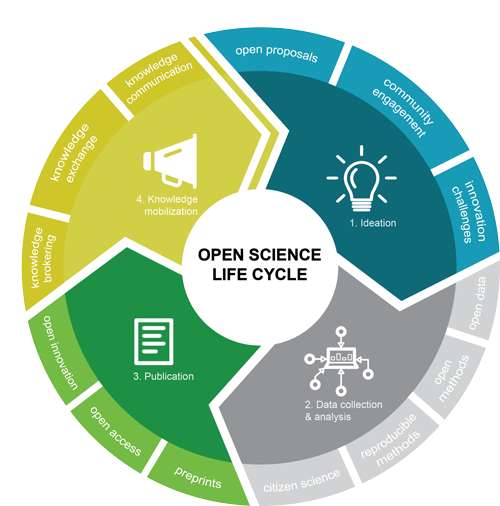
What challenges do BTS and OS respond to?
Introduction to Tools for BTS and OS
- Repository: An online archive for the storage of digital objects including research outputs, manuscripts, analysis code, and/or data (Lonsdorf, 2026).
- Data Sharing: A collection of practices, data, and technologies that make research outputs accessible and reusable by other researchers (Elsherif et al., 2026).
- Open Source Software: Freely accessible software that can be used, modified, and distributed by anyone (Open Source Initiative, 2025).
- PsychoPy: Open-source software based on Python used for conducting behavioral experiments (Peirce et al., 2019 / PsychoPy).
-
R / RStudio: R is a programming language for statistical computing, and RStudio is an integrated development environment used for data management, cleaning, and analysis.
Beginner’s Guide to RStudio | Posit Cheatsheets -
GitHub: A cloud-based platform that allows developers and researchers to collaborate, store, and share code—especially useful for large-scale projects such as BTS.
GitHub | Guide to Using GitHub | DataCamp Introduction to GitHub